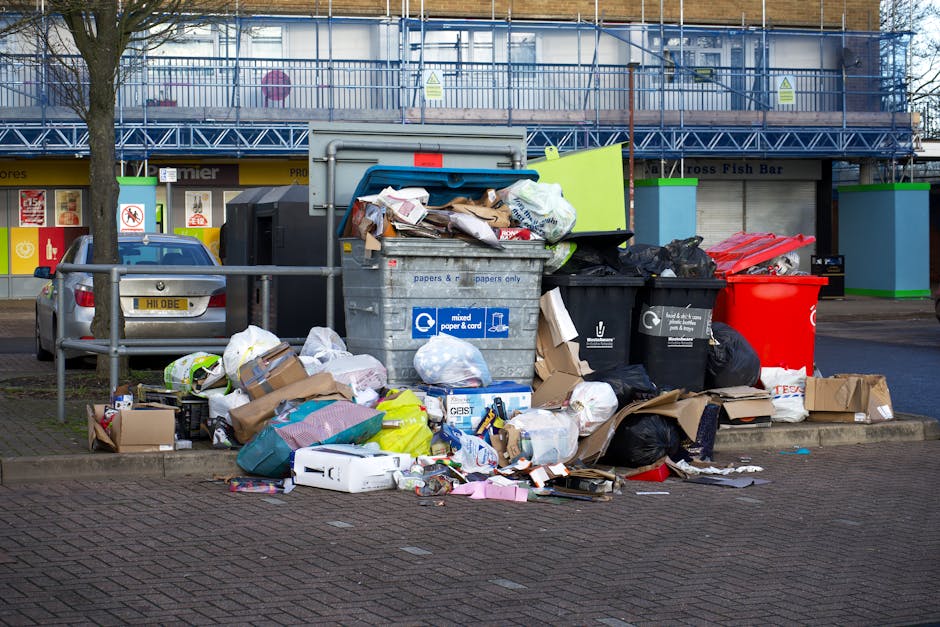
Cricklewood Broadway rubbish removal guide for flats

If you live in a flat near Cricklewood Broadway, rubbish can build up in a way that feels oddly fast. One chair becomes three. A broken wardrobe sits in the hallway. Then suddenly the bin store is full, the stairwell smells a bit off, and you're wondering how on earth to shift everything without upsetting neighbours or causing a mess. This Cricklewood Broadway rubbish removal guide for flats is here to make the whole job feel simpler, safer, and a lot less stressful.
We'll walk through how flat rubbish removal works, what tends to cause problems in shared buildings, the best ways to clear bulky items, and how to choose the right approach for your situation. Whether you're decluttering, moving out, handling a landlord's request, or dealing with a stubborn pile of mixed waste after a refurb, you'll find practical advice you can actually use.
Why Cricklewood Broadway rubbish removal guide for flats Matters
Flat living changes the rules. In a house, you can usually wheel bags out the front, leave a pile by the drive, and sort things in your own time. In a flat, though, you're dealing with shared entrances, narrow stairs, communal corridors, lift limits, parking restrictions, and sometimes very patient neighbours who are still trying to sleep while you drag a wardrobe past the landing. Not ideal.
That's why rubbish removal for flats needs a slightly different mindset. The goal is not just getting rid of waste. It's getting it out cleanly, without blocking access, damaging walls, or creating friction with the building manager. Around Cricklewood Broadway, where apartment blocks, converted houses, and mixed-use buildings sit close together, those little details matter more than people expect.
It also matters because the wrong approach can create a domino effect. One loose bag left in a communal area can attract complaints. One oversized item left beside the bin area can be refused. One damaged lift panel can turn a simple declutter into a costly headache. To be fair, nobody wants that for a sofa that should have been gone two days ago.
Expert summary: For flats, the best rubbish removal is rarely the cheapest-looking option on paper. It is the one that protects access, keeps shared areas tidy, handles bulky items properly, and leaves no awkward aftermath for residents or managing agents.
If your flat clearance involves more than household bags, it may help to look at related services such as flat clearance, furniture disposal, or broader waste removal depending on what needs shifting.
How Cricklewood Broadway rubbish removal guide for flats Works
In practical terms, flat rubbish removal is usually a planned collection rather than a simple bin-lift. Someone assesses what needs removing, checks access, estimates the volume, and decides whether items can be taken in one visit or need a split approach. That sounds straightforward. In real life, the access part is often where the job is won or lost.
Here's how it usually works when the process is done properly:
- Assess the waste type and amount. Mixed household rubbish, furniture, white goods, builder's debris, and confidential waste all need different handling.
- Check access. Stairs, lifts, loading bays, parking, and concierge arrangements all affect timing.
- Plan the removal route. Protecting hallways and communal spaces is a big deal in flats.
- Load carefully. Bulkier items often need dismantling or two-person handling.
- Sort for reuse, recycling, or disposal. Good waste removal is not just "throw everything in one place and hope."
- Clear the area fully. The job should end with the room, corridor, or flat ready for its next use.
If you are dealing with a packed flat after a move, downsizing, or a tenancy change, the wider home clearance and house clearance pages may also help you think through the size and type of job.
There is one thing people often underestimate: time. A small pile of bags may be quick. A third-floor flat with no lift, a heavy wardrobe, and one narrow parking window is a different story entirely. That's why a realistic plan beats guesswork every time.
Key Benefits and Practical Advantages
Good rubbish removal for flats isn't just about tidiness. It gives you breathing room. And honestly, once a flat has been properly cleared, the whole place feels different. You hear the floorboards again. You notice the light. You stop stepping around things. It's a small change that can make a space feel bigger and calmer.
- Less stress in shared buildings. Properly managed removal avoids awkward encounters in hallways or the bin store.
- Safer access. Fewer trip hazards, fewer blocked exits, fewer complaints from neighbours.
- Better handling of bulky items. Sofas, beds, wardrobes, fridges, and old tables can be removed without you doing the heavy lifting alone.
- Cleaner end result. A good clearance leaves no dust trail, broken packaging, or half-cleared corner behind.
- More flexibility. You can clear one room, one load, or the whole flat depending on what you need.
- Improved recycling outcomes. Items can be separated rather than dumped together, which is better for the environment and, frankly, feels better too.
For furniture-heavy clearances, you may want to compare furniture clearance with mattress and sofa disposal, especially if you're dealing with just one or two awkward pieces rather than a full flat.
A lot of people also like the convenience of a single provider handling the whole job. If the flat includes old appliances, then fridge and appliance removal can be a sensible add-on, because fridges are one of those items everyone underestimates until they're in the doorway. Then the fun begins.
Who This Is For and When It Makes Sense
This kind of rubbish removal is useful for more people than you might think. It is not just for big clear-outs or end-of-tenancy chaos. Sometimes it's a very ordinary life moment: a new sofa arrives, the old one has to go, and there is no lift and nowhere to store it. Simple, but still awkward.
It makes sense if you are:
- moving out of a flat on or near Cricklewood Broadway
- decluttering after a long period of accumulation
- dealing with landlord or letting-agent instructions
- refreshing a rented property between tenants
- clearing inherited belongings from a flat
- removing old furniture after a purchase or delivery
- handling post-renovation debris from a small flat refurb
- trying to empty a storage-heavy balcony, cupboard, or box room
It also suits residents who simply don't want to spend a weekend making repeat trips to a local tip or trying to coax a sofa through a staircase that was clearly designed by someone with a grudge. You know the sort.
If your space is more mixed-use, such as a small home office setup or a flat with documents to dispose of carefully, confidential shredding may be relevant too. That's one of those small details that becomes very important once the papers start piling up.
Step-by-Step Guidance
Here is the simplest way to tackle rubbish removal in a flat without turning the day into a minor saga.
- Sort the waste into clear groups. Keep general rubbish, furniture, electrical items, and anything potentially hazardous separate.
- Measure large items. Don't assume the wardrobe will fit through the landing because it "probably should." Measure it.
- Check building rules. Some blocks require advance notice for collections, lift reservations, or parking arrangements.
- Identify anything that needs special handling. Fridges, paints, chemicals, sharps, and heavy rubble need extra care.
- Clear a route first. Move smaller bits out of the way so bulky items can come out cleanly.
- Protect floors and walls. A blanket, sheet, or floor protector can save a lot of irritation later.
- Book the right service level. A tiny load, partial clearance, or full flat clearance all need different planning.
- Do a final sweep. Check cupboards, under beds, balconies, and behind doors. That last forgotten bag is always there.
If you need help deciding what counts as a safe or suitable load, the page on hazardous waste disposal is a useful reference point for items that should not be mixed with ordinary rubbish.
And if you are unsure whether your job is really a clearance or just a few awkward items, look at furniture clearance and flat clearance side by side. That usually makes the choice clearer.
Expert Tips for Better Results
After enough flat clearances, a few things become obvious. First, the building is often the main variable, not the rubbish. Second, the smallest bit of preparation saves the most time. Third, people underestimate stairs. Every single time.
- Keep the route as open as possible. Move shoes, bikes, plant pots, and hallway clutter before the team arrives.
- Bag loose waste tightly. It makes lifting cleaner and quicker.
- Separate reuseable items early. A decent chair or table may be better handled as furniture disposal rather than general waste.
- Tell the provider about access quirks. Tight turns, fob entry, or no-parking restrictions should be mentioned upfront.
- Group bulky items together. It sounds basic, but it helps the whole process feel less scattered.
- Use boxes for mixed bits. Screws, cables, and odd household leftovers are easier to manage in a box than in five loose bags.
Here's a small real-world observation: the cleanest jobs are usually the ones where the resident has spent 20 minutes preparing, not the ones where everything is left to chance. Not glamorous, but true.
If you are dealing with a sofa, check mattress and sofa disposal. If a fridge is part of the mix, fridge and appliance removal is the smarter route. And if there are still piles in the garage, a neighbour's storage cupboard, or a shared basement, the relevant service pages such as garage clearance can help you avoid splitting one job into three messy ones.
Common Mistakes to Avoid
Flat rubbish removal goes wrong in fairly predictable ways. Luckily, they are avoidable.
- Leaving everything until collection day. Sorting on the morning of the job is stressful and usually slow.
- Ignoring access issues. A collection team cannot magic a king-size mattress through a tiny stairwell. The geometry wins every time.
- Mixing hazardous and general waste. That can create safety problems and may stop the collection from going ahead as planned.
- Forgetting shared spaces. Corridors, lifts, and entrances need to be kept clear.
- Underestimating the volume. A few bags plus one cupboard full of "miscellaneous" can add up quickly.
- Choosing the wrong service type. A simple waste pickup is not always enough for a full flat clearance.
A quieter mistake is failing to think about what happens after the waste leaves the flat. If the aim is a full reset before a sale, a tenancy handover, or refurbishment, the end point matters just as much as the removal itself. The room should be left genuinely usable, not "mostly done."
Truth be told, that last 10% often takes more planning than the first 90%.
Tools, Resources and Recommendations
You do not need much to organise a flat rubbish removal well, but a few basic tools can make life easier.
- Strong bin bags and boxes for loose household waste and mixed small items
- Measuring tape for doors, stair turns, and large furniture
- Marker pen to label what stays, what goes, and what needs special handling
- Protective gloves for sorting sharp or dusty items
- Furniture blankets or floor protection to reduce scuffs in communal areas
- Basic screwdriver or hex keys if a bed frame or wardrobe needs partial dismantling
For planning, it helps to think in terms of service types rather than just "rubbish removal." A full flat with mixed contents may suit home clearance. A smaller job focused on one room or a few pieces of furniture may be better handled through furniture disposal. If you are comparing value and the scope feels unclear, the pricing and quotes page is a sensible place to look before committing.
One more practical recommendation: if a building has strict entry rules or quiet hours, ask about timing early. A collection that starts too late can become awkward for everyone involved. Nobody wants a door buzzer debate at 7:30 in the evening.
Law, Compliance, Standards, or Best Practice
For flat rubbish removal in the UK, the safest approach is to follow normal waste-handling best practice and use a provider that deals with waste responsibly. You do not need to memorise legislation to stay on the right side of things, but you should be careful about where waste goes, how it is handled, and whether anything needs special treatment.
In everyday terms, that means:
- do not leave waste in communal areas
- do not block fire exits, lifts, or escape routes
- do not mix general waste with hazardous items
- do not assume a landlord or managing agent will handle everything for you
- do ask about recycling, disposal, and safety procedures
When a property contains electrical items, bulky furniture, or mixed loads from a refurb, it is sensible to choose a service that can separate items responsibly. If you are dealing with builders' debris as well as household waste, the page on builders waste clearance is relevant too, because construction waste should not be treated like a normal household bag collection.
Best practice also includes sensible business standards: clear communication, fair handling of access issues, and respectful behaviour in shared buildings. The better providers tend to be calm about this stuff, which helps a lot when there are stairs, residents, and a trolley in the mix.
For wider trust signals, you may also want to read about insurance and safety, as well as the company's health and safety policy and recycling and sustainability approach. Those pages help show how the work is managed beyond the visible load on the day.
Options, Methods, or Comparison Table
There is more than one way to clear rubbish from a flat. The best option depends on volume, access, and how hands-on you want to be.
| Method | Best for | Pros | Watch-outs |
|---|---|---|---|
| Self-removal | Very small loads and easy access | Cheap if you already have transport | Time-consuming, heavy lifting, multiple trips |
| Skip hire | Renovation waste or larger bulk loads | Good for ongoing work, simple on-site storage | Space, permits, access issues, flat locations can make this awkward |
| Man-and-van style clearance | Bulky items and mixed household waste | Flexible, quick, often better for flats | Needs good access information and accurate load estimates |
| Full flat clearance | End-of-tenancy, probate, downsizing, major declutter | Most comprehensive, least hassle | May cost more than a single-item pickup |
For many flats on or around Cricklewood Broadway, a clearance-style service is the most practical option because it avoids the awkwardness of storing waste while you wait for disposal. If you are comparing with a skip, the page on what can go in a skip is useful, especially if you are unsure whether your waste mix is suitable.
There is no single perfect answer here. The right method is the one that fits the building and the mess. Simple as that.
Case Study or Real-World Example
Here's a typical scenario. A tenant moves out of a two-bedroom flat near Cricklewood Broadway after a long stay. The property has an old sofa, a broken bed base, a small fridge, several bags of mixed household rubbish, and a couple of boxes of paper that should not just be dumped with everything else. The hallway is narrow, the lift is small, and the flat is on an upper floor.
In a case like that, the sensible approach is to separate the load first. The sofa and bed base are handled as bulky furniture. The fridge goes into appliance removal. The paper is set aside for shredding. The rest is bagged and checked for anything hazardous. The collection route is planned before anything is moved. No guessing, no dragging and praying.
What makes this work well is not heroics. It's order. The items are cleared in the right sequence, the communal space stays tidy, and the flat is left ready for cleaning and handover. That's the sort of job where everyone breathes easier at the end. Even the neighbour who watched from behind the curtain.
If the same flat also had a room full of older furniture from storage, then looking at furniture clearance or flat clearance would be the natural next step.
Practical Checklist
Use this quick checklist before collection day.
- Sort rubbish into bags, boxes, furniture, electricals, and special waste
- Measure bulky items and check they can safely leave the flat
- Confirm lift, stair, and parking access
- Notify building management if needed
- Clear shared hallways and entry points
- Protect floors, corners, and door frames
- Set aside anything reusable, confidential, or hazardous
- Group items near the exit if building rules allow it
- Double-check cupboards, under beds, and balcony storage
- Choose the right service level for the amount of waste
If you are still unsure whether the job is small, medium, or full-scale, take a minute to review flat clearance alongside waste removal. That little comparison can save a lot of back-and-forth later.
Conclusion
Flat rubbish removal on Cricklewood Broadway is really about making a shared-space problem feel manageable. Once you account for access, bulky items, safety, and building rules, the whole process becomes much easier to plan. The trick is to prepare a little, choose the right service, and avoid the common mistakes that create hassle in flats.
Whether you are clearing one stubborn sofa, emptying a packed one-bedroom flat, or dealing with a mixed load after a move, the best result is the one that leaves the place cleaner, calmer, and ready for what comes next. That's the real payoff. Not just less clutter, but a space that feels like yours again.
Get a free quote today and see how much you can save.
If you are ready to take the next step, you can also read more about the company's approach on about us or move straight to book online when the timing feels right.
Frequently Asked Questions
What is the best way to remove rubbish from a flat on Cricklewood Broadway?
The best way depends on the type and amount of waste. For small bagged rubbish, you may only need a simple collection. For bulky furniture, mixed waste, or full clearances, a planned flat clearance service is usually easier and safer.
Can bulky items be taken out of a flat with stairs only?
Usually yes, but access needs to be checked first. Large items may need dismantling, two-person handling, or a different removal route. Narrow stairwells are where careful planning really pays off.
Do I need permission from the building management first?
Sometimes you do, especially if the building has rules about access, lift use, parking, or communal areas. It is worth checking before collection day so you do not end up in a last-minute scramble.
How do I know whether I need waste removal or flat clearance?
If you only have a few loose items, waste removal may be enough. If the job includes furniture, multiple rooms, or a full clear-out, flat clearance is usually the better fit. The scope is the clue.
What should not go with normal flat rubbish?
Hazardous items, certain chemicals, and some electrical or specialist waste should be handled separately. If you are unsure, look at the relevant specialist service first rather than mixing everything together.
Can old sofas and mattresses be removed from flats?
Yes, and they are common items in flat clearances. Sofas and mattresses are bulky and awkward in stairwells, so it helps to use a service designed for that sort of removal.
Are fridges and appliances included in flat rubbish removal?
They can be, but appliances are often treated separately because of their size and handling needs. A dedicated appliance removal service is usually the neatest option.
What happens if the flat is on a high floor with no lift?
That does not stop the job, but it changes the planning. Access details become more important, and the team may need to allow extra time or use a different removal strategy.
How can I make collection day go more smoothly?
Sort items in advance, keep the route clear, and make sure the provider knows about access restrictions. A little preparation cuts out most of the faff, honestly.
Is it better to book one collection or several small ones?
For flats, one well-planned collection is often easier than several small trips. It reduces disruption in shared spaces and usually feels less stressful overall.
What if I have confidential papers as well as rubbish?
Keep them separate and use confidential shredding rather than mixing them with general waste. It is one of those small decisions that gives real peace of mind.
Where should I look if I want to compare prices first?
The best place to start is the pricing and quotes page, which helps you understand how different jobs are assessed. If the waste mix includes furniture, appliances, or renovation debris, checking the relevant service pages can also help you compare properly.